
Blog / Service

Blog

All Service News New Inventory Community Events Fleet Green Parts Social People Pre-Owned Inventory Body Shop Finance
Ford Vehicles

Why Isn't My Vehicle's Air Heater Working?

Grand Rapids has already seen its first snowfall even before the official start of winter. Though it was short-lived, there will be plenty more to follow before spring arrives in West Michigan. Therefore, making sure your vehicle's heater is in good working order makes the difference between a comfortable winter, or bundling up every time you go for a drive. Not to mention, you'd have difficulty clearing the windshield every morning! more Read More This article briefly explains how your vehicle's heater works, plus some common issues within its systems that cause your heater to stop blowing warm air. How Your Vehicle's Heater Works: In A Nutshell Ever wonder how your vehicle makes the heat that comes out of the vents? If you're familiar with how radiators work, it's quite simple. When your engine is running, it produces heat. So much of it in fact that if the heat isn't released, the engine will warp and damage itself. That's why you have a radiator and coolant. The coolant is pumped through a series of hoses that absorb the heat and as it passes through the wound-up pipes of the radiator, a fan cools the liquid coolant and blows it out the front grille. However, there is a smaller radiator toward the back of the engine called the heater core, which does the same thing but the heat is sucked out of the engine bay and blown into the cabin with fans. Why Isn't My Heater Blowing Warm Air Anymore? If your heater isn't working anymore, there could be any number of reasons. Rest assured that the highly-trained and friendly technicians at the Borgman Service Center will get to the bottom of it, but here are a few common causes. Your Coolant Levels Are Low As we explained above, coolant passing through the heater core is what supplies the heat to the cabin of your vehicle. If your coolant level is low, it could be that you have a leak somewhere or your engine needs a new gasket. If this is the case, coolant is being allowed to mix with the engine oil and is burning up with the gasoline. You might notice thick, white, sweet-smelling smoke from your tailpipe if this is the case. Coolant can degrade over time, but if you're filling the coolant reservoir often, it is a critical issue that needs to be addressed by the Borgman Service Center as soon as possible. It Could Be An Issue With The Heater Core Itself If your coolant level is fine, there might be a clog within the heater core's tubes. A flush might resolve the issue, but replacing the heater core can be an expensive repair. If your heater core is going out, you might notice a fog, or a sweet, almost fruity smell coming from the vents. Other symptoms include the engine overheating or unexplained coolant loss. Alternatively, a faulty thermostat could be causing the cooling system to not switch lines and supply the heater core with hot coolant. Luckily, the thermostat is a relatively inexpensive fix. It Could Also Be A Problem With Your Controls If your temperature-selector, whether analog or digital, isn't getting the signal from the dial to your vehicle, then you won't get any hot air. Or, you might only get hot air when you don't want it - such as during the summer. This can be caused by debris gumming up the inner-workings of the dial or some fault within your head unit. If you suspect this might be the case, let us know and our technicians will look into it. Enjoy A Warm, Comfortable Winter with the Borgman Service Center in Grand Rapids, MI If your heater isn't blowing hot air like it used to, schedule an appointment today and get back to driving safely and comfortably in the cold weather. Your heater does keep you warm, but it also keeps your windshield clear of ice and fog, so issues with your heater pose safety concerns as well. Our friendly and knowledgeable staff are here to help you with all of your automotive needs. Use our easy Online Appointment Scheduler to plan your visit or head over to our Service Specials for the latest offers. Come see why we're the Best in the West!

Vehicle in winter

Borgman How To: Go Prepared on West Michigan Winter Road Trips

The holidays are fast approaching, meaning many of us will be traveling across West Michigan to see loved ones. Given the time of year, there's a chance you may drive through some of West Michigan's famous winter weather. Earlier in the season, West Michigan is prone to lake-effect snowstorms, which come on suddenly and can deposit up to a foot or more of precipitation. If you're out driving during one of these storms, preparedness is key for arriving safely. In this Borgman How-To, we'll give you some pointers on preparing your vehicle for the trip. more Read More Checking Your Tires We know it seems like we mention this in every "vehicle check" post we do, but that's because your tires are so important for vehicle safety. They are your sole contact with the road, and play a role in traction, steering, and stopping. They should be free of cracks, worn patches, and their tread depth should pass the "penny test" before you set out. Crouch down and put a penny with the top of Abraham Lincoln's head pointing down into the tread. If the top of his head is covered when looking at it flat-on, your tires still have enough tread. Making sure your tires are properly inflated is just as important. There should be a sticker in your driver's side door well that states how much air you should keep in your tires, but if you're not sure, 33 pounds per square inch (psi) is fairly common. This number should also appear in your owner's manual. Remember to check the condition of your spare tire as well. If your tires don't pass the "penny test" or you're noticing uneven wear, cracks, leaks, or bulges, schedule an appointment with the Borgman Service Center today and ask about our current rebates and specials on name-brand tires. Check All Of Your Lights Though it's the law to ensure all of your lights are in working order before driving, we mention it because it's important. Making sure you have a clear view of the road in front of you is a good thing even in clear conditions, but making sure you're visible to other drivers is equally important. Your owners manual will have detailed instructions about how to change your headlights, turn signals, running lights, and taillights, as well as which bulbs to use for each. However, if you don't feel comfortable taking apart these assemblies or are short on time, we'll be happy to change them for you. Check The Condition of Your Battery Your vehicle's battery can suddenly stop holding a charge in the cold weather. The rule of thumb is to replace your battery every five years. If your battery has ever been depleted, the need could arise sooner. When your car has trouble starting in the cold, sometimes it's just because of built-up corrosion on the terminals. You can clean this yourself by disconnecting the battery and using baking soda and an old toothbrush. Disconnect the negative first, then the positive, reconnect the positive first, then the negative. If you're uncomfortable doing this, or you just want to see if your battery is going faulty, we'd be happy to help. Construct A Roadside Emergency Kit Putting together a kit for use in emergencies and storing it in your vehicle grants peace of mind, and is something you hope you never need but don't want to be caught without. What you keep in there is up to you, as you can get as elaborate as you want with them. However, we recommend the following items as a bare minimum, with some items added for the winter months. First Aid Kit. You can usually find these preassembled at big box grocery stores and they're generally not expensive. Roadside Hazard Signs. These have replaced road flares and are covered in reflective material to alert other drivers. Flashlights and Batteries. Keep a flashlight and a fresh pack of batteries in your kit as well, but don't store the batteries in the flashlight as they will leak and corrode over time. Gloves, Blanket, Hats, Socks. Having warm winter clothing in the back can be a big help if your heater is not operational. You can supplement these with space blankets and instant hand warmers. Clay Cat Litter and a Small Shovel. These can help you get traction if you're stuck in snow or ice. Use the shovel to clear the tires and bottom of the vehicle as best as you can, then sprinkle the cat litter to make a track your tires can grab onto. Since the litter is just being used for traction, the cheap non-clumping stuff works just fine. Strong Rope or Tow Straps. These can be used by another vehicle to pull your vehicle out of a ditch or a snowbank. Jumper Cables. These can be used to help your vehicle start if your battery dies. Having your own means you don't need to depend on a stranger having some. Foam Tire Sealant. While this stuff can get you home in a pinch, it's not a permanent fix. Be sure to let us know you used it when you come in to get your tire patched or replaced. Other Misc Items. These might be overkill, but if you feel more comfortable being prepared for anything, consider items like weatherproof matches, a multi-tool with a knife, cord, a compass, paper maps, a rain poncho, protein bars, and other survival gear. Get Your Vehicle Ready for Winter Road Trips at Borgman Ford in Grand Rapids, MI We hope this list helps you make sure your vehicle is ready for travel across West Michigan this holiday season. If you discover any potential issues with your vehicle, know that the Borgman Service Center is here to help. Our expert technicians will look over your vehicle and make sure all of your maintenance and fluids are up to standard when you get The Works package, and we'll happily answer any questions you may have about your vehicle. You can use our easy Online Scheduler to plan your visit, Contact Our Service Department with any questions, or check out our latest Service Specials. We hope you drive safely this winter and remember we're here for all of your vehicle needs. Come see why we're the Best in the West!

2019 Ford Snow

Borgman How-To: 4 Critical Vehicle Parts To Check Before the West Michigan Winter

Ready or not, the colder weather is on its way to West Michigan. As most Michiganders know, the mixture of cold, dry air, and the salt spread on the roads wreak havoc on your vehicle over time. However, there are things you can do to minimize the risk of something going wrong from the winter wear and tear on your vehicle. In this Borgman How-To, we'll go over some things you can do or check for yourself. That way you'll know when it's time to bring your vehicle in for service. more Read More When driving in the West Michigan winter weather, there are four forces working against you: Cold, Dry Air Reduced Traction Salt & De-Icing Solution Poor Visibility Let's take a look at each of these, and if you have any suspicions or doubts about your vehicle's winter-readiness, schedule an appointment with the Borgman Service Center today! Check Your Hoses & Belts For Cracks & Leaks When rubber gets cold, it shrinks and becomes more brittle. Because of this, rubber components under the hood of your vehicle (and to some extent your tires) are susceptible to cracking or splitting in the cold weather. There a number of rubber components, but the most common troublemakers in the cold are the serpentine belt, coolant hoses, and the vacuum lines. Check your coolant hoses for any chalky residue, indicating steam escaping from cracks. Take a look at your serpentine belt too, (it's on the side of the engine) and make sure you don't see any excessive wear. Vacuum leaks are harder to spot, but if you notice your vehicle accelerating strangely or revving too high or too low, schedule an appointment with us immediately. Check Your Tires As The Temperature Drops Your tire pressure drops in the cold, so make sure to check your tire pressure often this time of year. It's usually best to check pressure first thing in the morning when the tires are cold. Properly-inflated tires are essential for your vehicle's handling, stopping distance, and fuel economy. While you're checking pressure, make sure you still have good tread on your tires too. While you can get a tire tread depth gauge, it's much easier to use a penny. Turn it so Abraham Lincoln is upside down, and put the penny into the tire tread. As long as the tire is covering the top of his head, your tires are still good. If you're noticing the rear tires are less worn than your fronts, come on in for a tire rotation! If driving in ice and snow gives you trouble, you might want to talk to our experts about a winter set of tires too! Keeping Road Salt Off Your Vehicle During the winter, the road commission sprays the streets and highways with a salt solution to melt road ice. This solution isn't just salt either, they mix in other chemicals that help melt ice faster and at lower temperatures. Unfortunately, the same reaction that causes the ice to melt also rusts your vehicle faster than just salt water would. This not only causes cosmetic damage, but it also corrodes your frame and suspension as well. During the winter, you have two options: be diligent about having your car washed, or ask us about rust protection with our friends at Great Lakes Chemical. Increase Visibility with New Wiper Blades Being able to see while it's snowing is critical, as you have reduced traction and other drivers to pay extra attention to. If your wiper blades are streaking or making lots of noise, now is the time to have them replaced. We have a great selection of different wipers for different seasons, and our staff will be happy to explain the difference to you. We'll lay out a good-better-best selection and answer any questions you have. Get Ready for the West Michigan Winter at Borgman Ford in Grand Rapids, MI Is it time for a basic service check? Have any questions about any of the tips listed above? Trust the experts at the Borgman Service Center to ensure the work is done right. Keeping up on your maintenance is the key to safety during the winter months. Take a look at our Service Specials and Schedule Your Appointment online today. Our friendly and knowledgeable staff is here to help if you have any questions. Come see why we're the Best in the West!

summer season

Check out these Fun Outdoor West Michigan Road Trip Destinations

With Labor Day marking the unofficial end of the summer season, you might be looking to have one last hurrah through West Michigan before the colder weather arrives. Road trips are a fun, inexpensive way to see Michigan and visit places you'd otherwise never see. more Read More Best of all, day trips don't require a whole lot of planning, given that your vehicle is in good, working order. If you want to be sure before you hit the road, trust the experts at the Borgman Service Center to thoroughly inspect your vehicle. We'll make sure your tires, brakes, fluids, and other systems are in ship-shape so can focus on exploring Michigan with confidence. Ready to hit the road to adventure? Take a look at these three fun destinations all within a reasonable distance of Grand Rapids, and better yet, they're all outdoors so you can enjoy your trip at minimal risk during the pandemic. Nordhouse Dunes Wilderness Area 113 Miles | 2 Hour Drive from Grand Rapids, MI Located just north of Ludington, MI, and situated between the Lake Michigan lakeshore and Hamlin Lake, Nordhouse Dunes are a great destination for people who love nature, hiking, and camping. Whether you enjoy the view from atop a 140-foot dune or strolling through the woods to observe the wildlife, there's plenty to explore in this 3,450 acre National Forest. The Nordhouse Dunes are popular among hikers and campers, with about 10-miles of trail accessible from 2 developed trailheads at the end of Nurnberg Road and the Lake Michigan Recreation Area. Best of all, you're only a short trip from the Ludington State Park & Campgrounds, or the many bars and restaurants in Ludington itself. Be sure to check ahead though in case you need to make special arrangements during COVID-19. You can learn more about Nordhouse Dunes Wilderness Area and plan your trip here. Silver Lake State Park 76 Miles | 90 Minute Drive from Grand Rapids, MI For those that want a little more thrill from their day-long road trip, Sand Lake is a popular destination. Here, you can put your ORV through its paces in the Off-Roading Area, rent 4-wheelers, go on dune rides, and more. There's also a campsite if you plan on staying overnight, but you'll likely need to make a reservation in advance so be sure to call ahead. This State Park encompasses just under 3,000 acres of lakeshore dunes and beach, and calls off-road enthusiasts from all over, as it's the only place you can drive on sand dunes in the eastern United States. You can also bring your boat and enjoy the scenery from the water! You can learn more about Silver Lake Dunes here. Saugatuck Dunes State Park 39 Miles | 35 Minute Drive from Grand Rapids, MI If you're looking for something more leisurely like a long walk on the beach, we suggest taking a look at the Saugatuck Dunes State Park. Just a short while north from Saugatuck's Oval Beach, this small state park offers 2 and a half miles of secluded coastline along Lake Michigan and roughly 1,000 acres of dunes and rolling hills to explore. Though camping is not permitted here, it's still a fantastic place to spend the day and watch the sunset over the lake. In addition to being relatively close to Grand Rapids, it's also within minutes of Saugutuck's downtown area, with various shops, art galleries, restaurants, and ice cream parlors. Be sure to check in to see which businesses are operating this year though, as some are only allowing a limited number of people inside. Learn more about Saugatuck Dunes here. Make Sure Your Vehicle is Road-Trip-Ready at the Borgman Service Center in Grand Rapids, MI Taking one last trip out of town is a great way to have fun with the whole family. By exploring West Michigan's state parks, you're also having fun safely by avoiding enclosed spaces and places with crowds of people. If you're planning on getting out there before the summer ends, schedule a checkup at the Borgman Service Center. Our experts can make sure you're up on your regular maintenance, fluids are topped up, tires are in good shape, and find unexpected problems before you hit the road. Schedule your appointment online and be sure to check out our latest Service Specials. During your visit, we'll make sure you understand everything we find about your vehicle so you can make informed decisions, then make the necessary repairs in a timely manner. Come see why we're the Best in the West!

Vehicle interior

How Do Vehicle Air Conditioners Work, and When Is It Time To Have Them Serviced?

Though West Michigan has gotten a brief reprieve from the summer heat, more warm weather is surely on its way. Driving in a hot car is downright miserable, so if it's been a few years since your air conditioning system has been inspected, or it's just not working as well as it used to, then it's time to come into the Borgman Service Center for an inspection. more Read More Though sometimes spotting an issue with your a/c isn't as cut and dry as "it's working or it isn't." In this article, we'll cover how air conditioners work as well as point out signs that it may be time to have your air conditioning system serviced. How Your Vehicle's Air Conditioning System Works Using your air conditioner is pretty easy. You push the A/C button, turn the temperature gauge to cool, and select whether to draw in air from outside the vehicle or recirculate the air inside the cabin. Some newer Ford Vehicles may also have dual-zone climate control with thermostats, or separate controls in the back of SUVs. No matter which type of system your vehicle uses, the principles of how the air is cooled remains largely the same. But how does the system take hot, humid air and turn it into chilly, dry air? You might recognize some of these concepts from your high school chemistry class. It's all basic thermodynamics. In essence, what's happening is this: hot, humid air is drawn in from outside, a refrigerant absorbs the heat as it turns from a liquid into a gas, the moisture in the air condenses into water, and the remaining cool dry air is blown into your vehicle. Then, a pump called the compressor pressurizes the refrigerant so this process can start all over again. The two basic parts of the air conditioning system are the compressor and the condenser. Refrigerants boil at room temperature, so when they're exposed to air coming into the cabin, they suck up heat energy from that air and turn into a gas. A fan blows the resulting cold air into your vehicle and the hot refrigerant gas is returned to the compressor. Here it is pressurized and transformed back into a liquid inside the condenser, which looks a lot like a second radiator. When this happens, the heat it absorbed to become a gas is released back outside. After the pressure is released at the expansion valve, the liquid refrigerant is free to grab more heat and turn back into a gas, and the cycle repeats. In case you were wondering how the refrigerant changes back into a liquid and releases its heat, this naturally happens when gasses are pressurized. The opposite happens when liquids are depressurized - you can boil water with a strong enough vacuum pump, no heat required! Boiling is actually when a liquid's molecules have enough energy to break free from surrounding molecules - turning from a liquid into a gas. Heating a liquid adds this required energy while lowering the pressure lowers the amount of energy needed. How Do I Know When There Is A Problem With My Air Conditioning? Now that we've covered the basics of how your vehicle's air conditioner works, you're probably already thinking of how different pieces of the system not working would present themselves. For instance, if your a/c is only blowing cold air on the highway, your condenser probably isn't getting enough airflow. It could be that the metal fins are bent, or it's clogged with dead bugs or other detritus. It could be that you do get cold air, but it's not very cold at all. In this case, it's possible that you have a refrigerant leak, and need to take it into the Borgman Service Center as soon as possible. The gasses inside older air conditioners destroy the ozone layer, and the newer ones are powerful greenhouse gasses. Do not use the a/c recharge cans from the auto parts store - refrigerant gas is very harmful to breathe, and illegal to discharge into the environment. If your air conditioning doesn't work at all, it could be your compressor, but our team of highly-trained technicians will be able to find the cause and keep you informed while we make repairs. If you are having a different problem with your a/c, we can help you find and fix the issue there as well. Normal Things Air Conditioners Do That May Look Like Issues Sometimes, you might see your vehicle's air conditioner doing things that look like issues but aren't issues at all. The most common non-issue we get asked about is, "why does smoke or steam come out of the air conditioning vents?" While this might look alarming, we assure you it's completely normal. Cold, dry air is meeting the hot humid air inside your vehicle and causing it to condense. This is actually how clouds form, and nothing to worry about. However, if the vapor lingers or smells like something is burning, it's worth calling us at the Borgman Service Center. The other thing you might notice on a particularly humid day is a large puddle under your parked vehicle after a drive. If you blot the puddle with a paper towel, you'll likely see this is just water. As the hot humid air is cooled in the air conditioner, moisture is drawn out of the air, condenses into water, and is drained out of the vehicle. It's the same concept as a cold soda can sweating in the heat. However, if you're noticing the interior carpet getting damp while running the air conditioner, those drains are clogged and need to be cleared out. The carpets should also be thoroughly cleaned before mold forms. Have Your Air Conditioner Inspected at the Borgman Service Center in Grand Rapids, MI If your air conditioning isn't blowing cold air the way it used to, or you're getting ready for your next adventure in West Michigan and want to be prepared, schedule an appointment with the Borgman Service Center today. Our friendly and highly-trained service technicians will inspect your air conditioning system for leaks, airflow, and problems with the electronics and report back our findings with an easy-to-understand report. As always, if you have any questions during your visit, our service advisors are here to help you make informed decisions about your vehicle. Come see why we're the Best in the West!
Ford Truck

What Is A Coolant Flush and Why You May Need One Before Exploring West Michigan This Summer

With summer coming up, it's important to know that your vehicle's cooling system is running at peak capacity. Whether you're planning a simple road trip across West Michigan with the family or towing the boat out to Lake Michigan, your radiator and coolant play vital roles in keeping your engine running. Overlooking problems, or simply being unaware of them can sideline your vehicle in moments, so trust the experts at the Borgman Service Center in Grand Rapids to inspect your vehicle before starting your adventure. more Read More This month, we're talking about coolant system flushes, why they're important, and how often you should have one done. What Do Radiators & Coolant Do? Your vehicle's radiator is a large heat exchanger located at the very front of your vehicle. A fan pulls heat away from the hot engine while the coolant moves throughout it, absorbing heat as it works its way through channels. When the pressurized coolant moves through the zig-zag of pipes in the radiator, the heat is released outside of the vehicle. The coolant is then returned to a reservoir where the process starts all over. When your engine burns gasoline to produce power, heat is released as a result. If not for the radiator and coolant, this heat would build up in the engine and start warping the metal components. This will quickly damage the engine and often require a complete replacement. Why Do You Need A Coolant Flush, And How Often? The Borgman Service Center recommends having your coolant flushed every 30,000 miles or every 5 years, whichever comes first. As it's used, the coolant begins to break down and lose the chemical properties that allow it to absorb heat more readily than plain water. Coolant also had properties that prevent corrosion. Once the coolant starts to break down, contaminates and corrosion can start to build up within the coolant lines, impacting efficiency and possibly damaging the radiator. Flushing the coolant means draining the old coolant out, using new coolant to flush the contaminants out, and then filling the system with new, fresh coolant. When done at regular intervals as recommended, coolant flushes keep your radiator and engine running at peak efficiency and extend the life of these components. Radiator Flushes & Maintenance at the Borgman Service Center in Grand Rapids Heading out of town this summer? Trust the experts at the Borgman Service Center in Grand Rapids to make sure your vehicle is running at peak efficiency. We offer many services from oil changes, coolant flushes, and complete repairs. No matter what your vehicle needs, our highly-trained technicians can handle it. Schedule your appointment online today and don't forget to check our latest Service Specials. We're also offering Free Pickup & Delivery during the Michigan shelter in place order. It'd be our pleasure to serve you. Come see why we're the Best in the West for over 60 years!

essential workers

Essential Workers Get The Works Free from Borgman Ford

Borgman Ford salutes our essential workers in West Michigan fighting on the front lines of the COVID-19 outbreak. It is our absolute pleasure to show thanks to them through a new program from Ford. Essential Workers can visit the Borgman Service Center now through June 30th and get "The Works" service package free for their vehicle. more Read More To reap the rewards of this program, all eligible customers must be enrolled in the FordPass Rewards Program and will receive enough points to their account to cover the cost of one The Works package. Though you must claim your points before June 30th, 2020, the points may be redeemed at a later date. To be eligible, customers must provide verification of employment such as a badge, pay stub, name tag, business card, an official letter stating essential worker status, or another form of verification that will align with a qualifying job category. With The Works, you will get everything you need to maintain the performance of your vehicle including tire rotation and pressure check, brake inspection, vehicle inspection, fluid top-off, battery test, filter check, plus a belts and hoses check. If you're not enrolled in FordPass Rewards, registration is easy. Simply visit this page and fill out the form. Soon, you'll be earning points for things you do every day, then using them for discounted services at the Borgman Service Center. If you have any questions at all about this program, FordPass Rewards, The Works service package, or anything else, please do not hesitate to Contact Us. Again, we extend our sincerest gratitude to West Michigan's essential workers. Thank you for all that you do, and it'd be our pleasure to serve you.

Get Your Vehicle Ready For Summer Adventures

Get Your Vehicle Ready For Summer Adventures in West Michigan

Get ready to get back in gear and start your summer adventures with Borgman’s service guide. We’re here if you need a tune up before the “Stay Home, Stay Safe” order lifts with free pickup, delivery, and loaners. This month, we're giving you a quick list of some parts of your vehicle you should check before setting out on a Memorial Day road trip, including advice for how to identify potential problems. Let's get started! more Read More First, Do A Quick Walk-Around You'd be amazed at how many issues you'll be able to spot by just doing a quick walk around your vehicle. You can check for chips in the windshield, dings in the body, panels covering the underside of your vehicle coming loose, tire condition, and exhaust parts starting to fall out of place. Be sure to really crouch down and have a good look with a flashlight. Tire Condition & Care During your walk around is the perfect time to check the tread depth of your tires. The penny trick is still a good tried-and-true method for getting a general idea of how much tread you have left. Simply insert a penny upside down and facing you into your tire's tread. If you can see all of Abraham Lincoln's head, it's time for new tires. While you're looking closely, check the tread wear to make sure that they're wearing evenly and inspect the sides of the tire for cracks or splits. If you have a tire gauge, it's a good idea to make sure they're properly inflated as well, and you can find that information on a sticker inside your door well or in your owner's manual. Uneven tread wear can point to issues with your alignment and suspension, and you should schedule an appointment with us right away. Check Your Coolant Levels & Inspect Your Radiator Now it's time to open the hood and check your fluid levels. While we're focusing on your cooling system below, it's not a bad idea to consult your owner's manual and check your engine oil, brake fluid, power steering fluid, and transmission fluid levels - taking careful note to measure the hot or cold levels - whichever is appropriate. First, never open your radiator cap if your engine is hot or even warm. Your coolant system is under pressure and the escaping fluids and/or steam can cause severe burns. Take a look at the fluid level in your reservoir and ensure it's within the acceptable range. Trace each coolant line with a flashlight and look for cracks, splits, and white-ish buildup around any of the joins or radiator cap, as these point to a leak. If your coolant level is low and you've found a leak, make sure to only use the matching color of coolant for your vehicle - do not mix and match colors! Next, schedule an appointment with the Borgman Service Center right away. What To Do If Your Vehicle Overheats If your vehicle begins overheating while you're driving, shut off the air conditioner, roll the windows down, and turn up the heater to full and try to vent heat from the engine bay, then pull over as soon as it is safe to do so. If the temperature returns to normal in a short amount of time, your radiator may have been overwhelmed. This usually happens while sitting in traffic on a hot day. If your vehicle does not cool down, shut the engine off and carefully open the hood to check your coolant level and check for leaks. Do NOT remove the radiator cap. If you are low on coolant, distilled water can work in a pinch but calling for roadside assistance is the best option. Checking Your Air Conditioning System Once your vehicle is up to operating temperature, your air conditioning at full blast should be giving you goosebumps. On a pre-road trip drive, check and make sure your air conditioner is still going strong and isn't in need of a recharge. It's much better to know if it isn't working properly now rather than when the vehicle is all packed up and you're hitting the road. Review Your Service Records Before you start your adventure, take a look at the service history of your vehicle and make sure you're not overdue for brakes, tire rotation, oil change, or other regular maintenance. If you're getting close on any of these, it's a good idea to visit the Borgman Service Center before you embark - we could also uncover unknown issues with your vehicle before they have a chance to delay your trip. Borgman Service in Grand Rapids is Here For All of Your Vehicle Needs Time for new tires? Air conditioning not working? Schedule your appointment with the Borgman Service Center in Grand Rapids today with Free Pickup & Delivery during the Michigan Stay Home, Stay Safe order. Be sure to check out the latest Service Specials and Make Your Appointment Online today to get the service you need before making your first summer trip in West Michigan. Come see why we're the Best in the West for over 60 years!

Keep Your Vehicle Working During Social Distancing

Borgman How To: Keep Your Vehicle Healthy During Shelter In Place

Keep Your Vehicle Working During Social Distancing While West Michigan drivers are staying home to help prevent the spread of coronavirus, it's important that steps are taken to ensure their vehicle stays healthy too. When vehicles sit for extended periods of time, tires, hoses, and other components can become damaged and require expensive repairs. The issues we're describing take longer than a few weeks to develop, but every time you warm up and drive your vehicle, you "reset the clock" so it's advisable to keep these things in mind when your vehicle gets less than regular use. more Read More In this Borgman How To, we'll give you a quick routine you can use to make sure your vehicle is ready to go when the shelter in place order is lifted in Michigan. If you need any service for your vehicle, Borgman's Service Center is still open and offering Free Pickup & Delivery with an appointment. The Best Thing You Can Do Is Drive It To prevent the issues with your vehicle we've described above, the best thing you can do to keep your vehicle healthy is to drive it. While the Michigan Governor's shelter in place order restricts what you can do and where you can go, taking the scenic route to the grocery store or to the bank should be enough to get your vehicle up to operating temperature. This allows moisture and acids that build up to burn off - mitigating damage to your internal components. Letting it idle in the driveway is not enough. Protect Your Tires From Dry Rot & Flat Spots Regularly driving your vehicle ensures your tires will not be in the same position in your driveway as when you left. To explain, when tires are sitting in one position for too long, they deform and develop a flat spot on the bottom and it's not something that can be fixed. You'll need new tires. Tires left sitting can also develop "dry rot," meaning that through a lack of heating, cooling, and stretching, the rubber becomes brittle and starts to crack. This leads to leaks and can only be solved with new tires. Keep Your Battery Charged Even when your vehicle is off, it's using electricity. On top of that, when car batteries aren't recharged by a running engine for prolonged periods of time, they naturally lose their charge. Since alternators in vehicles generally won't charge a battery below 1,000 RPM, you will need to drive the vehicle for about 20 minutes to get back up to a full charge. Alternatively, you can order a "trickle charger" and use that to keep your battery charged up - though this is not recommended unless you have your vehicle stored in a garage. The battery is the most vulnerable component of a vehicle that sitting for weeks at a time. Usually, draining a battery will damage it permanently and it will not be able to hold as robust of a charge. This gets worse every time it is depleted and eventually, it won't be able to hold a charge at all. Need Vehicle Maintenance? Borgman Service Is Open and We'll Come To You! At the time of this writing, the Borgman Service Center in Grand Rapids MI will remain open during the Michigan shelter in place order. To help stop the spread of COVID-19, we're taking many extra steps to ensure the safety and health of both customers and employees. One of these is Free Pickup & Delivery of your vehicle for service customers - no need to leave the house. We'll also sanitize your vehicle when we pick it up and when we return it to you. If you need maintenance, visit our Service Center page and schedule your appointment online - we'd be happy to be of service to you. If you have any questions, do not hesitate to Contact Us. See why we've been the Best in the West for 60 years!

Pot Hole

How To Survive the West Michigan Pothole Season

It's that time of year again: as the winter weather in West Michigan gives way to an early spring freeze-thaw cycle, potholes will start to appear en-masse across Grand Rapids motorways. Seasoned drivers may get very adept at spotting them and avoiding them - especially if they travel the same route every day - but hitting one is inevitable. The Borgman Service Center is here to help with some tips to avoid damaging your wheels or suspension should driving through one be unavoidable. If your vehicle is damaged by a big one (or several small ones) we have the knowledge and experience to make the necessary repairs and get you back on the road. more Read more What Components Can Be Damaged by a Pot Hole? When your wheels strike a pothole, sometimes nothing happens. The tires will cushion the blow, and the suspension will absorb the worst of it - they're doing their job of keeping the vehicle stable and absorbing shock. However, if the force of the collision is stronger than these components can withstand, you may see cracks or pieces of the tire missing, dents or cracks in your rim, bent or broken suspension and steering components such as tie rods, control arms, shocks, or struts, or any other part that connects the wheels to your vehicle. After hitting a particularly nasty pothole, this list will give you an idea of what to watch out for if your vehicle "feels different" or if you suddenly find yourself with a flat tire. If you're unsure what to look for, trust the experts at Borgman to give your vehicle a thorough inspection for any hidden damage. Where Do Potholes Come From? Why Does West Michigan Have So Many? Potholes are like mini sinkholes that form when water seeps into cracks in asphalt and then freezes. Water is somewhat special that when it freezes it expands, and with a lot of force to boot. This forces the cracks in the road open wider, allowing more water to get beneath it and wash out the sand and gravel under the asphalt. Eventually, the road gives way and we're left with a pothole. West Michigan is especially prone to potholes because of the effect Lake Michigan has on our weather. Our spring seasons are usually punctuated with bouts of snow and rain, sometimes in the same day. This is the worst-case scenario for asphalt, leading to the dreaded pothole season West Michigan motorists wish they weren't accustomed to. The Best Way To Drive Through a Pothole Unfortunately, there are some instances where you see a pothole and can't safely move around it. Borgman suggests following MDOT's advice here: hit the brakes, then release them just before impact and drive straight through. Hitting a pothole on an angle will often do more damage to your vehicle, as force gets transferred in ways your suspension can't compensate for, or your tires can't spread out the impact from. The Michigan Department of Transportation also recommends that if you see a nasty pothole, the best thing you can do to help other motorists is to report it online. Hit a Pothole? Trust the Experts at the Borgman Service Center in Grand Rapids, MI If you've run over a pothole in West Michigan recently and you're noticing some new sounds or your vehicle is handling differently, Schedule an Inspection today at the Borgman Service Center. Our highly-trained and friendly staff will inspect your vehicle for signs of damage and will make honest recommendations based on what they find. We offer expert service for all of your other vehicle needs too, including oil changes, tire rotation, alignments, and more. It'd be our pleasure to serve you. Come see why we're the Best in the West!

Servcie Technician

How Do Anti-Lock Brake Systems Work?

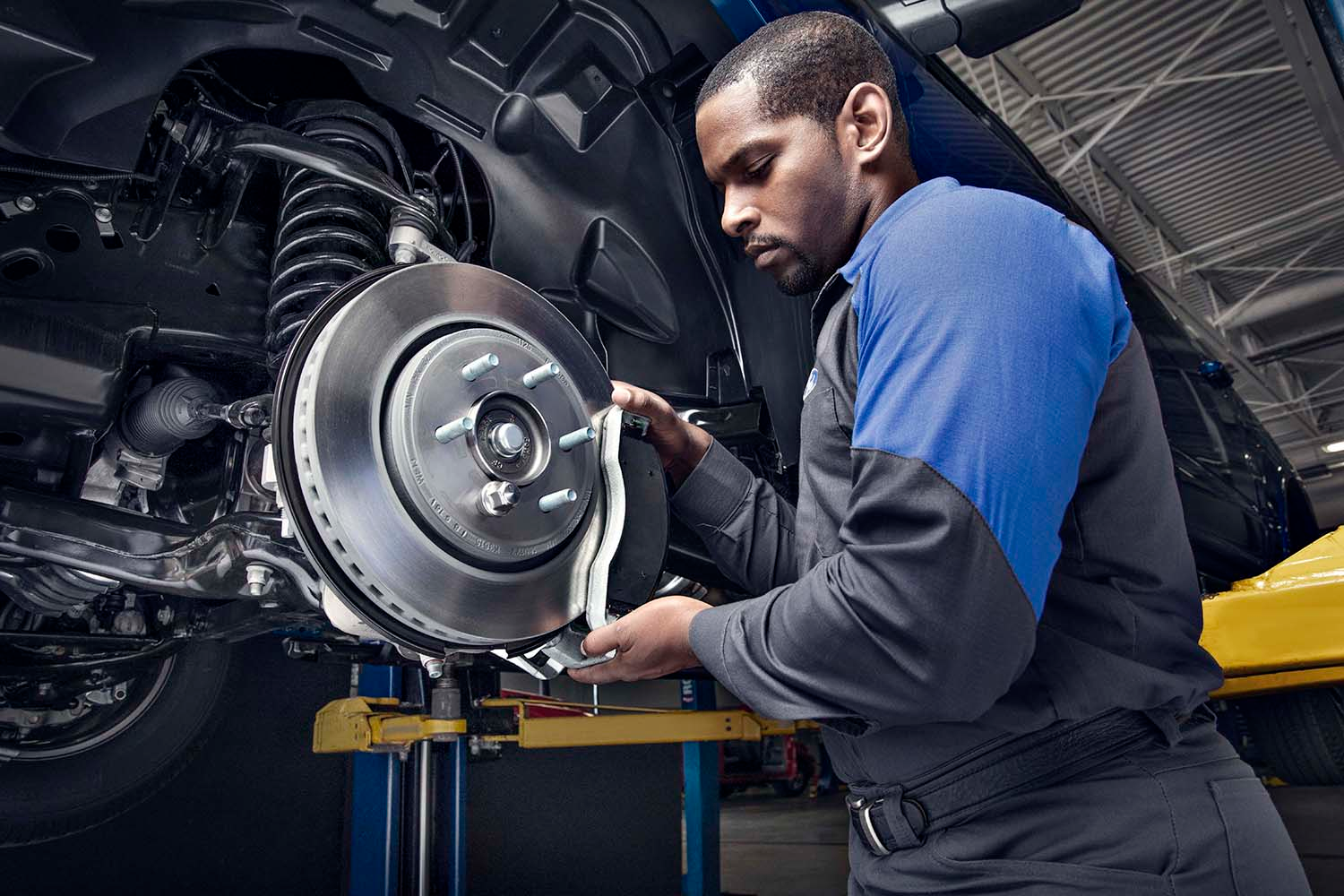
Anti-Lock Braking System (ABS) is a technology that works while you drive, ensuring that your braking system restores vehicle control when you start to feel out of control (in the case of a skid, for example). Dating back to the 1920s, anti-lock braking didn’t become standard on vehicles across the world until three decades ago, which was a major improvement in safety while driving in adverse or unstable conditions. Understanding why they’re part of your vehicle’s mechanical system and how it works is critical for knowing when it’s working in order to keep your driving as safe as possible, and when they’re not working and it’s time to bring it into the Borgman Service Center. more Read More How Does ABS Work? ABS ensures your brakes don’t lock in a position that may encourage skidding or loss of vehicle control — meaning, it initiates a slowdown in wheel rotation and automatically adjusts braking application (think a pumping mechanism) to make sure you don’t slide when you slam on the brakes. Essentially, it’s working in the background to help you stop safer whenever you initiate a hard, immediate cessation of speed. The pulsing brake pattern helps you maintain control. How is ABS Built? Generally, ABS has up to four wheel sensors that read or measure (by magnetism, for example) when tire rotation has dramatically shifted — so when the wheel stops rotating in a brake or significantly slows. When combined with an anti-lock control module and hydraulic control point, deliver pulsing pressure when your car is sliding or skidding. The best way to ensure you’re not skidding is not to apply the pumping to the brakes yourself, but rather to push the pedal down as hard and consistently as you can and let the ABS do as it’s designed to do. ABS Repair ABS functionality is part of the warning control module of a vehicle, meaning it’s designed to notify you when it’s off-kilter. Typically, the error is in one of the sensors, not in the ABS functionality. However, it’s important for you to bring your car in when you’re notified of an ABS malfunction immediately. If it’s a sensor, it’s likely debris has injured one or more of the sensors, and is an easy fix. If it’s your ABS, you shouldn't be driving without it. The Borgman Service Center will ensure your brakes are working properly, that ABS is responsive, and that your sensors are clear and operating flawlessly. For maximum efficiency, a working ABS should also be paired with good-condition braking pads and rotors, too! Of course, the best way to ensure you’re ABS is working properly is to come into Borgman Service Center and let us take a look. The Works is a check-up package that includes tire rotation and pressure check, a routine brake inspection, vehicle checkup, fluid top-off, battery test, filter check, and belts and hoses check for $44.95. Stay safe and stay informed, especially during the variable weather in Michigan as the seasons change! Check out our Service Specials and Schedule Your Appointment online today. If you have any questions, our friendly and knowledgeable staff is here to help so please feel free to contact us. Come see why we're the Best in the West!
2019 Ford Snow

Winter Care Car Tips

The cold weather can be hard on vehicles, especially when it lasts as long as it does here in West Michigan. With chilly temps and unpredictable weather for a few more months, it’s critical to know how to properly care for your vehicle before one of the usual winter mishaps occurs. Remember that typical setbacks in warmer weather could be detrimental to both your safety and the vehicle’s function in the frigid temps and winter weather. With safety and longevity in mind, below are a list of winter tips to keep your Ford or Mazda operating smoothly! more Read More Schedule a Service Check If you haven’t already done so, make sure you’re up to date on your vehicle’s regular service checks. Keeping the car at a healthy baseline is the best place to start! Borgman Service Center will ensure the basics are operating smoothly, and let you know if there are any concerns to look out for. Keep an Eye on your Battery Sometimes a battery that’s getting old will run perfectly fine in the warmer weather, but the moment the cold hits—it takes a dive. A Borgman Service Specialist can tell you about your battery’s life during a checkup, but for optimum problem solving during unexpected battery failures, keep jumper cables or a power pack starter in your vehicle. Tire Check If you don’t have winter tires or AWD, consider snagging a season-specific set to make sure you get in and out of wintery driveways and parking lots easily. If you’re good with what you have, ensure you’re monitoring tire pressure as the temperatures drop. For every 10 degrees in temperature outside, your tires may lose a pound of pressure. Keep an eye on them and keep them filled! Wiper Quality It seems obvious, but often drivers don’t notice the shabby performance of vehicle wipers until the need is dire. Sleet, snow, rain, ice, and even leaf piles can funk with wiper performance - both immediately and over time. Try to clean the windshield as thoroughly as possible each time you drive to eliminate obstacles, but most importantly, ensure your blades are good to go during whatever weather may fall. To prevent wiper damage, lift them off the windshield if snow or ice is expected to keep the elements away! Fill De-icing Fluid Since it’s winter in Michigan and the snow and ice is relentless once it starts, keep your wiper fluid filled up and possibly on hand at the house so you don’t run out. De-icing fluid is the best way to keep your windshield clear from ice and snow. Remember to never use hot water to clear ice or snow off of your windshield, as you’re risking a crack in the glass due to rapid surface temperature changes, which will lend you a far worse situation than you had before. Check Antifreeze A Borgman Service tuneup includes fluid checks, and your engine coolant should last you at least 5 years. If you haven’t been keeping up with normal service intervals, or you think it’s been over 5 years or 100,000 miles since your last flush, have us check out your coolant quality and level to ensure your engine runs smooth during the seasonal temperature shifts. Reduce Salt Exposure Salt and grime can cause rush and damage to the exterior of a vehicle. The best ways to protect your car from road salt is to: 1) wash your vehicle as often and quickly as possible in the case of acid rain or heavy salt treatment, 2) rinse the underside of your vehicle to rid salt buildup during the winter, 3) repair paint chips or scratches to prevent corrosion, and 4) protect and condition the vehicle’s finish with a paint sealant or undercoat treatment. We partner with Great Lakes Chemical Auto Appearance Specialists, who offer a variety of details that can help you combat corrosion, including rim protection, bedliner spraying, electronic modules, and rustproofing — all which help reduce the impact of recurring salt exposure in the winter months. If you still haven’t completed a basic service check or have questions or concerns about any of the tips listed above, trust the experts at the Borgman Service Center. We'll make sure the work—both maintenance and prevention—are done right to keep you safe and moving efficiently during the winter months. Check out our Service Specials and Schedule Your Appointment online today. If you have any questions, our friendly and knowledgeable staff is here to help! Contact Us and come see why we're the Best in the West.

Contact Us

Fill out this form below and we'll contact you shortly
*Required Fields